


beans and wheat

IMG_5404
shelling favas
fava beans
I so appreciated all your comments on your experiences cutting things out of your diet. I think it’s so interesting how experimenting with cutting just one thing out of your diet can make such an effect on the way you feel. If you haven’t yet tried eliminating anything from your eating habits, you might consider giving it a try. Just for a week at least, just to see if you detect any changes. Even if you don’t think you have any problems to fix. Maybe (hopefully if it’s a food you like) you won’t feel any different, but maybe, as some people have written, it will eliminate some headaches or joint pain or asthma. You never know until you try, right?

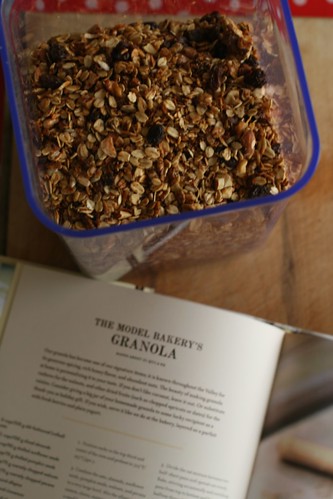
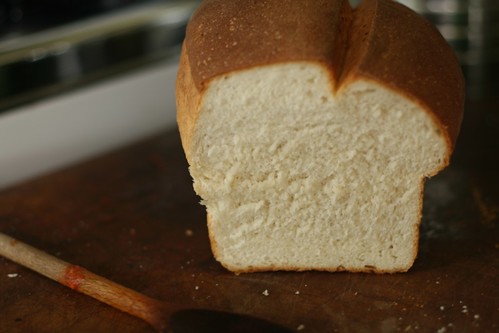
After at least 20 days off of wheat, I think I can say that giving up wheat for me personally, doesn’t make a huge difference. Well, it certainly has eliminated my spring allergy sore throat, but I think I’ve actually gained weight this month! I was hoping to get rid of a pound or two as we’ve been thrown full swing into swim suit season, but instead my shorts and tank tops are fitting a wee bit tighter! Maybe it’s from substituting corn chips & nuts instead of crackers and bread.

My son’s asthma is still active, but still seems less active than normal. My daughter’s eczema, which is the entire reason we’ve started this experiment hasn’t been eased at all. Poor thing.

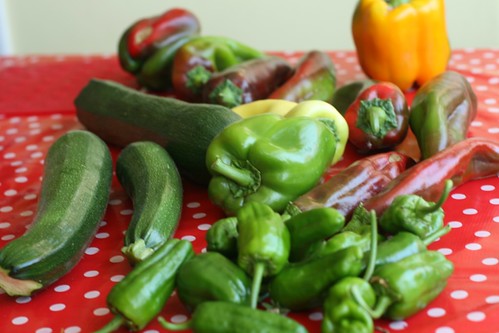
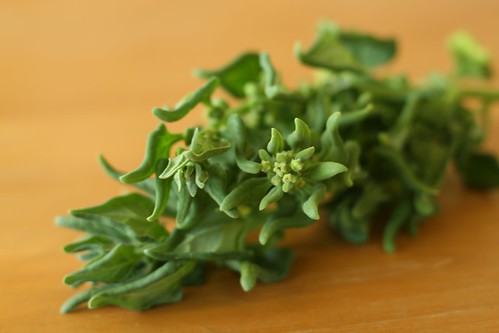
Maybe we haven’t been eating wheat but we have been eating from the garden! After parenting three toddler’s we can say that shelling beans (these are favas) can hold a two-year-old’s attention a surprisingly long time!

Thanks for your diet comments, keep them coming!

6 Comments

Filed under just picked

flowers & going wheat free

IMG_5331
IMG_5333
IMG_5335
IMG_5325
IMG_5359
IMG_5385
IMG_5387

It has been brought to my attention that there are other things that need addressing besides dreamily walking around the yard with your felco’s cutting flowers. I have been told there is laundry to do and bathrooms to clean and meals to prep and a wage to be earned. But who wants any part of that at this time of year?

In other news our whole family has given up wheat for the month of May. This is the third time I’ve done this. I did give up wheat for week in ’08 and then Scott and I gave it up last summer for a few weeks. We found some interesting discoveries last summer when we gave it up, like how Scott’s allergies completely went away and how we both felt lighter. This time we gave it up to see if it could clear up our daughters eternal eczema and help my son’s asthma. We are 14 days into it and while it hasn’t helped her eczema yet, it does seem to have helped with the asthma. And my usual spring time allergy induced sore throat has disappeared. It’s hard though, for us bread eaters to be off of wheat. I haven’t felt as much sacrifice as our kids, especially our 8-year-old (the one with asthma), who thinks this whole giving up wheat is a bunch of hooey. He wants pizza and pasta and bakery pastries and that’s all there is to it.

We’ll give it another couple of weeks and if this doesn’t clear up the eczema we’ll try a dairy free month (oh that somehow sounds even more tortuous than a wheat free month! Especially during hot ice cream season!). Knowing now that wheat really tends to ease our allergies and asthma during the heavy season is a great bit of knowledge going forward. Maybe every spring will become a wheat free time for our family.

Have you ever given up something? Did you see noticeable changes in your body because of it?

27 Comments

Filed under flowers, what we've learned

* l o v e *

IMG_5297
IMG_5298
IMG_5299
IMG_5300

* l o v e *

happy mother’s day to all you mothers this sunday & every day!

5 Comments

Filed under flowers

naked ladies make a mighty fortress :: a story of weed control

Late winter & early spring in our lives is a time of eternal weed pulling. This weed pulling became compounded when we moved out to the country. Without tidy city fence lines and paved street & sidewalk borders, in the country where the garden ends and a field of grass begins is really just a matter of where you’re willing to stop pulling weeds. These weeds seem to keep encroaching on us making our garden smaller and the field larger, but armed with our hands and our weed whacker we’re always determined to fight back.
IMG_5055

(weed free side + a soccer ball…always a soccer ball in my flower beds!)
IMG_5054

(just to the right, were the weeds are starting to take over)
This year I found something interesting though. In the flower bed that surrounds our back lawn weeds were only moving in to certain parts of the flower bed. Beyond this flower bed is a field and those grasses were making a concerted effort to take over, but only in one spot. After a bit of head scratching and investigation I realized that the areas that were weed free had a thick border of naked lady (amaryllis) bulbs behind them. It seemed as though the invasive grasses had a much harder time getting over the ‘fence’ of thick bulbs and greenery. Upon further research I found that using a thick rooted & foliaged plant as a weed barrier is indeed a sound way of weed control. These types of plants are called fortress plants (as coined by Toby Hemenway of Gaia’s Garden). Other fortress plants are comfrey, lemongrass, red hot poker and I’m betting that the skyscraper asters I have in other parts of my garden would do the job too.
IMG_5058

(the back side of the weed free section – naked lady greens are the wide, long leafed plants in the middle)
IMG_5059

(divided and soon to be planted naked ladies)
IMG_4173

(skyscraper aster blooming in October)
Just as soon as I learned this, I divided up those naked ladies and created a wall of them to surround my entire flower bed. So next spring, instead of weeding you’ll find me leisurely sipping a piña colada in the shade while my fortress plants do the work. Well….a girl can dream.

4 Comments

Filed under weeds

gardening in a dry year

IMG_5323
IMG_5312
IMG_5318
IMG_5321
IMG_5322

It’s been a dry year here in California. One of the driest winters on record. To us, even though we had a very wet fall, it seemed like after the holidays the faucet was shut off. There was really almost no rain whatsoever after the holidays. Such a strange winter. And this spring we are certainly seeing the signs. Sure, if you squint your eyes and turn your head a little to the left, things look pretty good. Flowers are blooming, trees are leafing out. But if you look closely you’ll notice that the lawn is almost dead already, spring flowers are getting torched by this early heat (supposed to be in the 90′s tomorrow!), and we are relying heavily on irrigation…already. This is going to be a long summer.

A few years ago I wrote a post on drought friendly vegetable gardening, (wow, I used to write such different posts back then!) which is worth a read if you are struggling with water issues too. In regards to that post, we outfitted two more beds with in-line drip irrigation. We ordered 15 yards of mulch to heavily cover the irrigation and our tender crops. We are also focusing heavily on three beds this growing year instead of last years four beds. And I’m heavily mulching the flower gardens to help retain every last ounce of water in the soil. We need, however to get these beds on a timer, so that they can be watered in the evening or early morning hours. That is an easy step, we just need to put it higher on our priority list.

Luckily we have the option of putting our laundry on grey water. We’ve had this since we moved in, but it only drains out to one spot. Though I shouldn’t complain, the snowball hydrangea looks quite happy about the situation. However, my hope for the near future is that I can hook it up to a pipe that has multiple perforations in it, so that it can water a larger area along our foundation plantings.

How is the rain/water situation where you garden? Do you have any drought gardening tricks?

10 Comments

Filed under mulch, soil, state of the garden, water, what we've learned

saving the bees : an adrenaline filled tale

IMG_5340
Luckily, since I last wrote, I realized that not all is lost with the bees. After a frantic email out to our group of Sonoma Valley beekeepers, a phone call, a visit and some very wise emails we concluded that my bees got too cold over winter. That what I was looking at was not chalk brood but chilled pupae. The one hive with the queen should be good to go with a little care. The queenless one…well that was a conundrum. My bees were now too old to properly rear a queen (newborn bees are the ones who become nurse bees and take care of the brood). Even if I gave them a queen, there still wouldn’t be any nurse bees to take care of the future eggs. The situation seemed dire.
IMG_5339
Not two days after my queenless discovery I received an email from our group facilitator that she and two other women were going to meet to split a hive. If I came, I could take some frames of brood and nurse bees to combine with my older queenless foragers so that they could raise their own queen. Once a hive detects that a hive is queenless (that only takes an hour) they will take a good looking egg and develop it into a queen. Now this process takes some time, 16 days until she hatches, plus another week or more until she is mated and ready to lay eggs. Since I had to go to the bee store for supplies yesterday I asked if they happened to have any extra queens. They did! This would save the hive about three weeks worth of time. So with my queen in a little cage and a small box of nurse bees to keep her happy we headed home.
IMG_5338
IMG_5343
Today I headed up to Glen Ellen to this amazing property (where all of these pictures were taken) to meet these ladies to do a hive split. Bee people, I have found, are really great, interesting people. The kind of people that you enjoy being with. And today was no exception. After a solid two hours of hive work we split the two tall hives to prevent them from swarming. One split went to me, one to the owner, Lisa. Afterwards we were all beat, it was hot today. Working in a hive is intense. You’re usually hot, you lose a ton of water wearing long sleeved shirts and pants, your adrenaline is rushing a bit, and you are completely ‘in the moment’. I tend to loose all sense of time. We regrouped around this magnificent hand built table with snacks and cucumber water and retold what we had learned.
IMG_5341
I left feeling worn out but exuberant. I put the bee box in my van and headed back home. Right away I noticed a few stray bees flying around so I stopped to let them out. Then a few more miles down the road I found a LOT more bees flying around and realized I was going to have a problem on my hands. I stopped at the nearest turn out and brainstormed…the box lid wasn’t fitting on tightly enough. I pulled the box out and put it in the shade of a tree. If I could take off the lid, put my shirt over the top of the box and then put the lid back on, I would be in business. Which is right about when I realized that I had left all my bee gear back at Lisa’s house. I stupidly tried my trick anyway. The moment I took that lid off, I had a box full of angry bees on my hands. I threw my shirt over the box to contain most of them and was immediately swarmed and stung. I walked far away, took a deep breath, got in my car and with one bar left on my cell phone, made an SOS call to Lisa. She not only drove to meet me and brought my veil and gloves, but put the lid on the box for me and wrapped it up tight in a blanket.
IMG_5344
Once I got home I was able to combine the new bees with the old (using the newspaper sprayed with mint simple syrup trick) and placed the queen in with the new bees. I put the lid on tight, walked away and fell into a useless heap on the couch. Oy! I’m not used to all this drama. There are a lot of routine-filled and ordinary days in my life as a mother of 3 little ones. Beekeeping takes me out of my comfort zone down an avenue completely unrelated to mothering and I do so enjoy it!

10 Comments

Filed under beekeeping

bees & flowers :: successes & failures

IMG_5253
IMG_5283
IMG_5285
IMG_5289
IMG_5270

It’s that time of year where the flowers are coming inside. Our beautiful new windows (such a treat to have new windows!) are getting opened everyday to enjoy spring breezes. Slowly the line between indoors and outdoors is getting blurred.

It was a welcome side indeed to walk into a house filled with flowers on a day like today, when upon complete inspection of my two hives, I realized both are in a sad state of decline. One is queenless, has wax moths and appears to have sent out a well populated swarm. The other, also in low population, has a queen but appears to have a fair amount of dead, almost mature larvae still in their cell (chalkbrood possibly?). Neither hive looked good. It was supposed to be a good day with only my oldest son at home. We went out to brunch and then were to have a happy, learning filled hive inspection together. We learned, for sure, but having mama walk back into the house with a heavy heart and tears in her eyes was not part of the plan.

I’ve been told that this happens. Colonies die. To not give up. But it is hard not to feel incredibly guilty. What was I thinking in believing I could keep tens of thousands of bees happy when I have such little time to give them? And now I have to find time despite foreseeing a busy weekend. Do I combine them? Do I get a new queen? Do I call it all a loss? Oy!

The good news is that the garden is booming along and I’ve learned a few new tricks that I’m looking forward to sharing with you. In a rare instance, plants that I thought I had killed over the winter are making a strong comeback and the new plants I got this year are growing just great. (Usually I always kill a few new plants.) Maybe I should keep my focus on growing plants and not an apiary.

…at least there are flowers…


16 Comments

Filed under beekeeping, flowers